It's Thursday afternoon. A server just texted that she's done, and the new line cook didn't show for his second shift. Last week's applications are still sitting there, because nobody had time to call anyone back.
So you hire whoever picks up first and train them during service. Some of them stay. Plenty leave before the training pays off, and you're back to the same pile.
People quit restaurant jobs often. In July 2026, 3.7% of workers in accommodation and food services quit their jobs in that one month, according to the Bureau of Labor Statistics. The rate for all private-sector jobs was 2.1%.
Line cook and server interview questions
Set the questions once for each role. Most restaurants start with these:
- Shifts: which nights, doubles, weekends, and holidays they can work, and whether they can close.
- Station or section: for cooks, the stations they've worked, like grill, sauté, fry, or prep. For servers, how many tables they've carried on a busy night and which POS system they know.
- The rush: “Tell me about the busiest shift you've worked. What did you do when the tickets backed up?” Use the answer to plan your own follow-up. A phone call won't show you how someone moves on your line, so keep a hands-on step in your process.
- Food handler card: which card or certificate they hold.
- Getting to work: how they'll get to an early prep shift, and home after a late close.
How hiring runs while you run service
HireBus writes your job ad with the shifts, the pay, how tips work and what your kitchen is like, then posts it where cooks and servers look for work.
Iris follows up while the applicant is still interested and interviews them by phone with your questions. RightSeat™ then scores each candidate's behavior, experience, and skills for the seat you're filling.
You read the answers and the scores, then decide who comes in for a trial shift or a stage. Good people you don't hire this week go on your bench. The next time someone walks out mid-shift, you already have a few people to call.
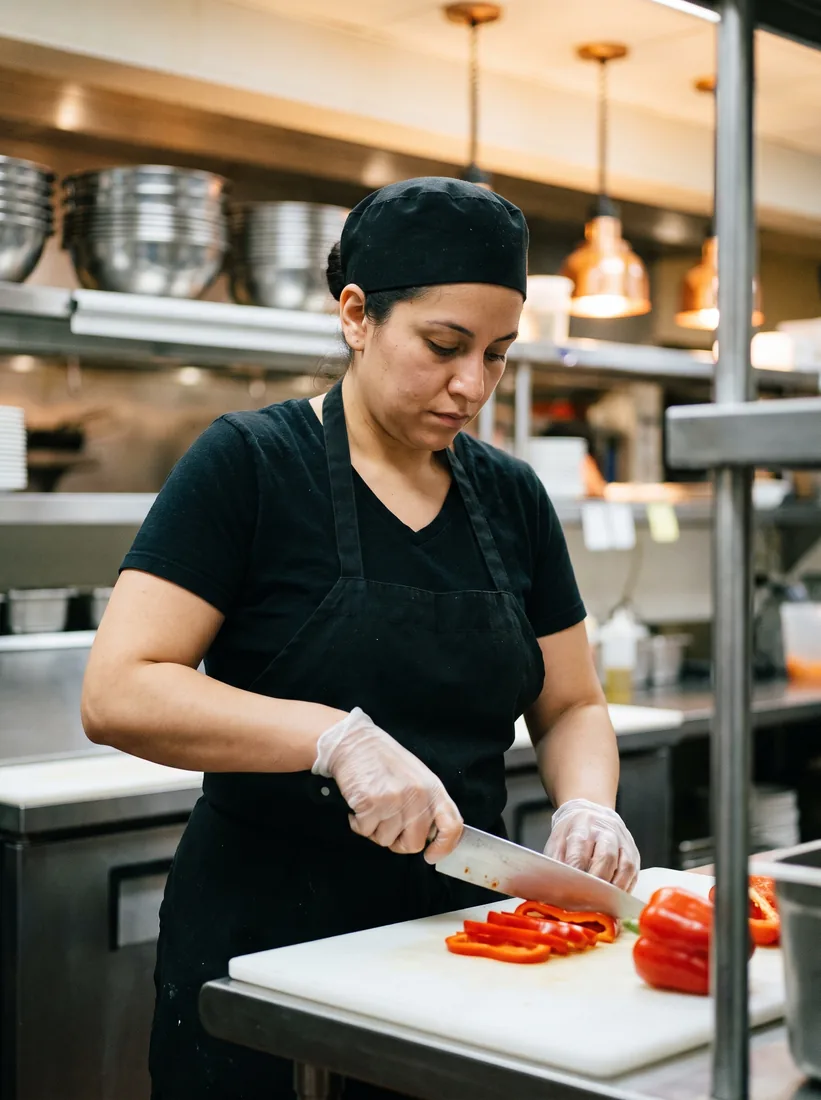
Restaurant jobs, front and back of house
- Line cook: the stations they've run and how they talk with expo during a rush.
- Prep cook: knife work, and whether they can follow a prep list on an early start without a chef standing over them.
- Dishwasher / busser: showing up on time, and whether they want to move up to prep or serving someday.
- Server / bartender: section size, POS experience, your state's alcohol service rules, and how tips are shared.
- Host: phones and the waitlist when the door is packed.
- Shift manager / kitchen manager: opening and closing, the cash drawer, food cost, and running a crew on a short-staffed night.
Questions restaurant owners ask
Can Iris interview for front and back of house at the same time?
Yes, within your plan's limit on active roles. The pricing page lists 1 active role on Starter, up to 3 on Growth and up to 10 on Max. Set up each opening as its own role with its own questions. A line cook gets asked about stations and tickets. A server gets asked about tables and guests.
Can Iris check a food handler card or an alcohol server permit?
Iris can ask which cards or permits an applicant holds. Your team checks the documents, and your local rules, before the first shift.

Founder & CEO of HireBus. Brandon took over his father's window cleaning business in 2012 and grew it past seventy employees in six seasons. He founded HireBus in Denver in 2021 with Rick Breden, PhD, an industrial and organizational psychologist. Read our story.